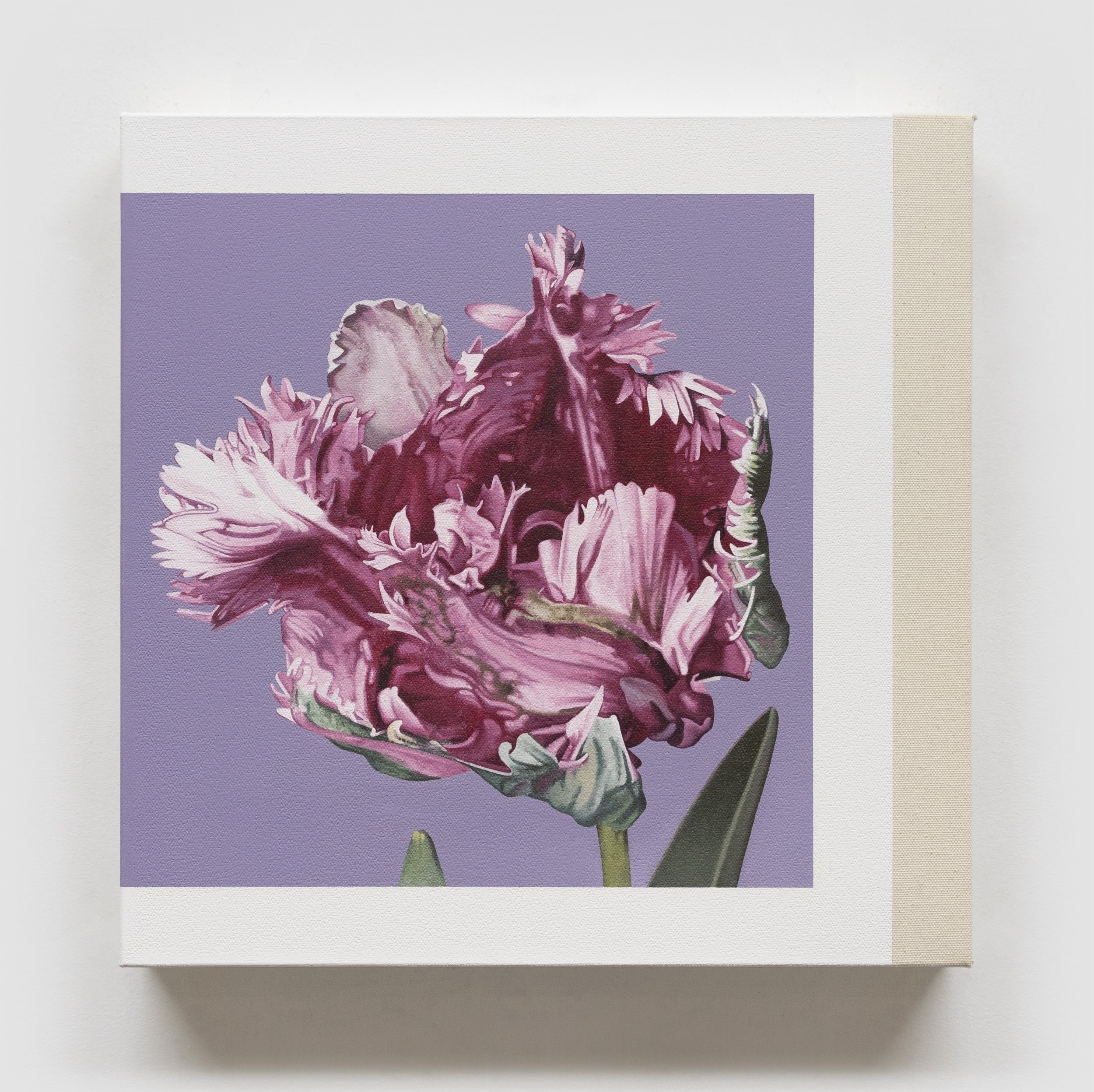
Fantasy, Greigii, Late Spring, variant 1 (TCDFPHG, 1969), oil on canvas, 20” x 16”, 2020
Artificial Marvels (2020-22)
Artificial Marvels is a series of paintings of tulips, sourced from a visual flower dictionary published in 1969. Tulips symbolize, almost to excess, the quintessential still life of the Dutch Golden Age.¹ This period not only elevated the tulip to a symbol of wealth and refinement but also coincided with the birth of the modern art market and the rise of auction houses, culminating in the lore of “tulip mania,” one of the earliest financial bubbles.²
For me, however, tulips signify something else: an artificial marvel.³ They embody nature transformed—tamed, cultivated, and disciplined into a commodity, reminders of human intervention. The most coveted variegated tulips of the seventeenth century were in fact the result of a fatal virus (Tulip Breaking Virus) that infected and weakened the bulb, often killing the flower prematurely.⁴ Modern biotechnology has since engineered tulips to replicate the chromatic effects of infection while preserving the flower’s vitality, producing a living imitation of what was once a symptom of disease. In this sense, tulips also testify to a longer history of human coexistence with viruses—a negotiation between destruction and adaptation.
My paintings of tulips layer multiple techniques and modalities. Some are rendered in high-fidelity photorealism, achieved through delicate direct-painting that evacuates visible brushwork and foregrounds technical mastery. Others disrupt these surfaces with thick, gestural swaths of pigment—smeared, dragged, or layered across the image plane. These interruptions act as an index of the painting’s own material history, exposing the construction of its image as a kind of artifice. Raw canvas, primed surface, and frame are often left visible, making the work’s strata legible as a memory structure. Together, these paintings present a dialogical encounter: the sacred and the profane, refinement and rupture, technical control and childlike play.
The historical resonance of tulips extends further. During the Dutch Golden Age, their cultivation and speculation became bound up with Calvinist ideology and the Protestant work ethic that Max Weber later identified as foundational to capitalist modernity.5 In this way, tulips mark the intersection of aesthetics, religion, and economy: symbols of both spiritual discipline and worldly excess. The paradox of the tulip—prized beauty born of a virus—echoed uncannily during the COVID-19 pandemic,
when I made these works. That same period witnessed the speculative boom in NFTs, another instance of value inflated through desire and collapsing into obsolescence.6
The title Artificial Marvels invokes a longer genealogy of wonder. In medieval and early modern Europe, mirabilia—wonders—were collected in cabinets of curiosity (Wunderkammern).7 Some were natural marvels, others artificial inventions; both were invested with symbolic and magical power, believed to heal, protect, or harm. Ownership of marvels conferred status and authority, reinforcing hierarchies of knowledge and power.8 Lorraine Daston and Katharine Park describe how marvels, whether gems, relics, or automata, served both as instruments of conquest and as theaters of power, bridging the divine and the technological, the miraculous and the artificial.9
Tulips, too, occupy this liminal space: marvels of nature shaped into marvels of art, objects that collapse beauty, scarcity, speculation, and mortality. My paintings attempt to hold these contradictions on their surface, staging tulips as both relics of history and allegories of our present—symbols of value inflated, desire displaced, and memory negotiated.
Endnotes
1. Svetlana Alpers, The Art of Describing: Dutch Art in the Seventeenth Century (Chicago: University of Chicago Press, 1983).
2. Anne Goldgar, Tulipmania: Money, Honor, and Knowledge in the Dutch Golden Age (Chicago: University of Chicago Press, 2007).
3. Lorraine Daston and Katharine Park, Wonders and the Order of Nature, 1150–1750 (New York: Zone Books, 2001).
4. Wilhelmina F. M. Valkenburg, “Tulip Breaking Virus: A History of the Tulip’s Variegated Colors,” Netherlands Journal of Plant Pathology 94, no. 1 (1988): 1–10.
5. Max Weber, The Protestant Ethic and the Spirit of Capitalism, trans. Talcott Parsons (New York: Scribner, 1958).
6. Amy Castor and David Gerard, NFTs: The Future of Art or a New Kind of Tulip Mania? (self-published, 2021).
7. Paula Findlen, Possessing Nature: Museums, Collecting, and Scientific Culture in Early Modern Italy (Berkeley: University of California Press, 1994). 8. Horst Bredekamp, The Lure of Antiquity and the Cult of the Machine: The Kunstkammer and the Evolution of Nature, Art, and Technology (Princeton: Markus Wiener, 1995). 9. Daston and Park, Wonders and the Order of Nature, 255–310.
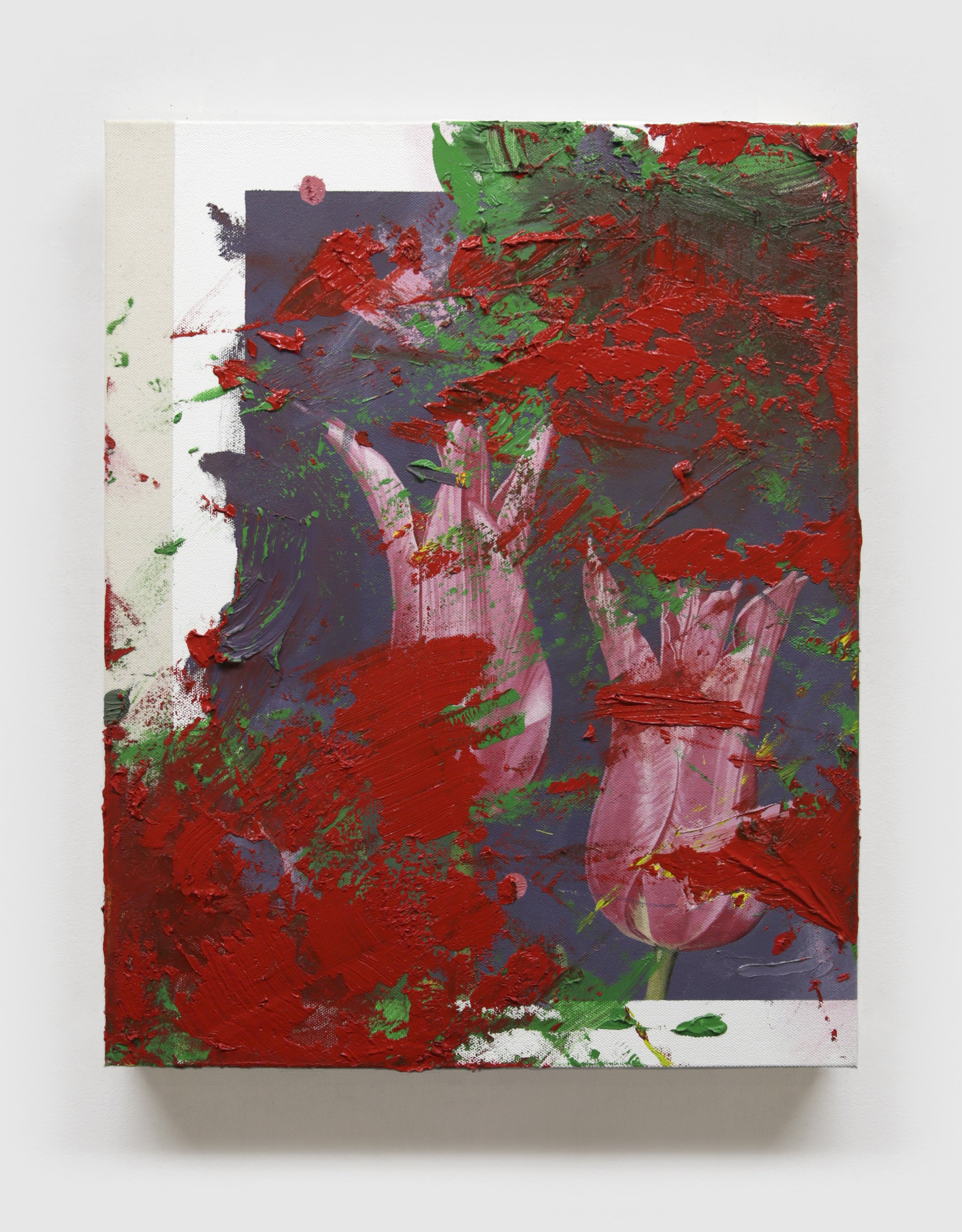
Mariette, Rembrandt, Spring, variant 2 (TCDFPHG 1969), oil on canvas,, 20” x 16”, 2022