Memorabilia (2003-06)
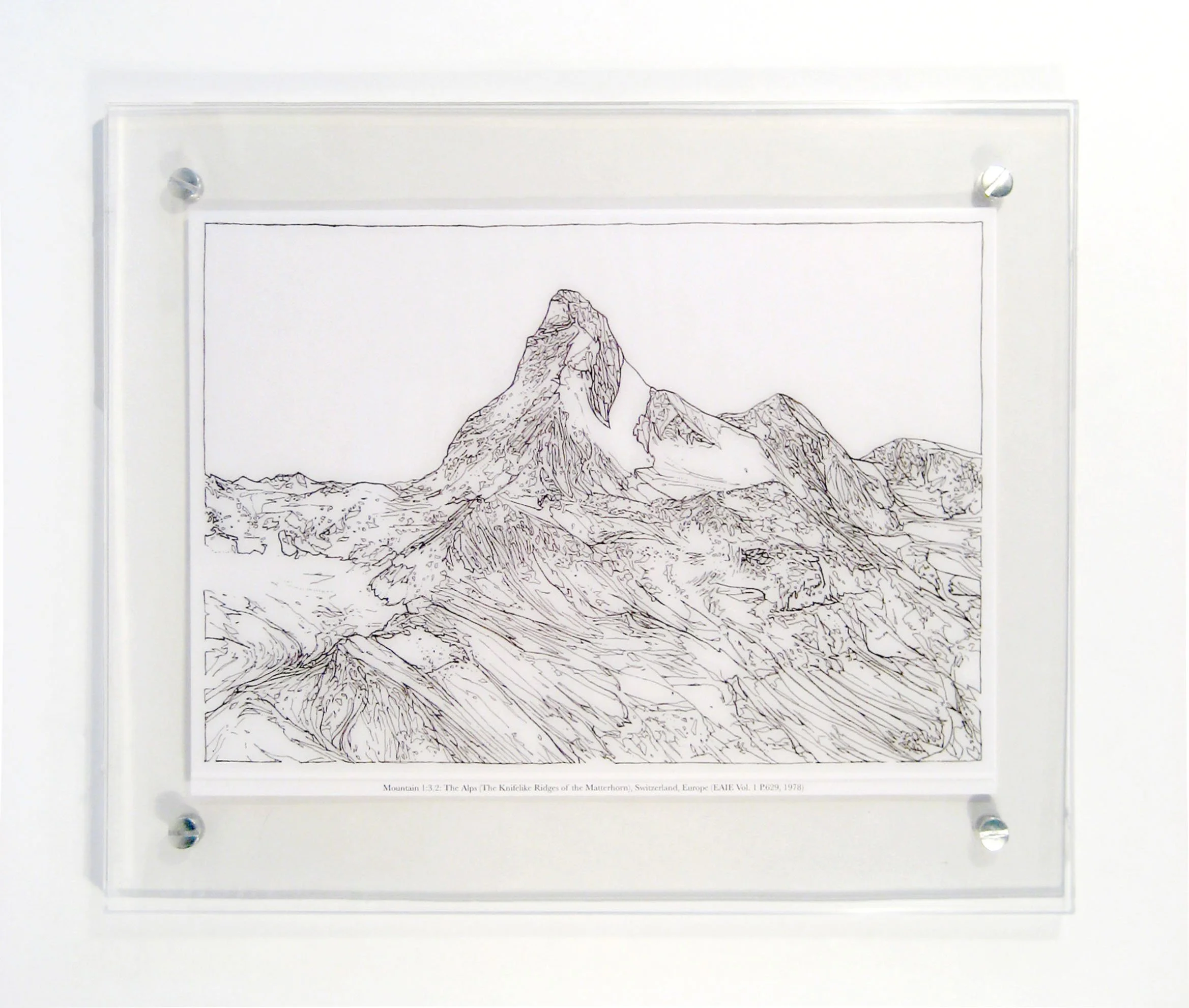
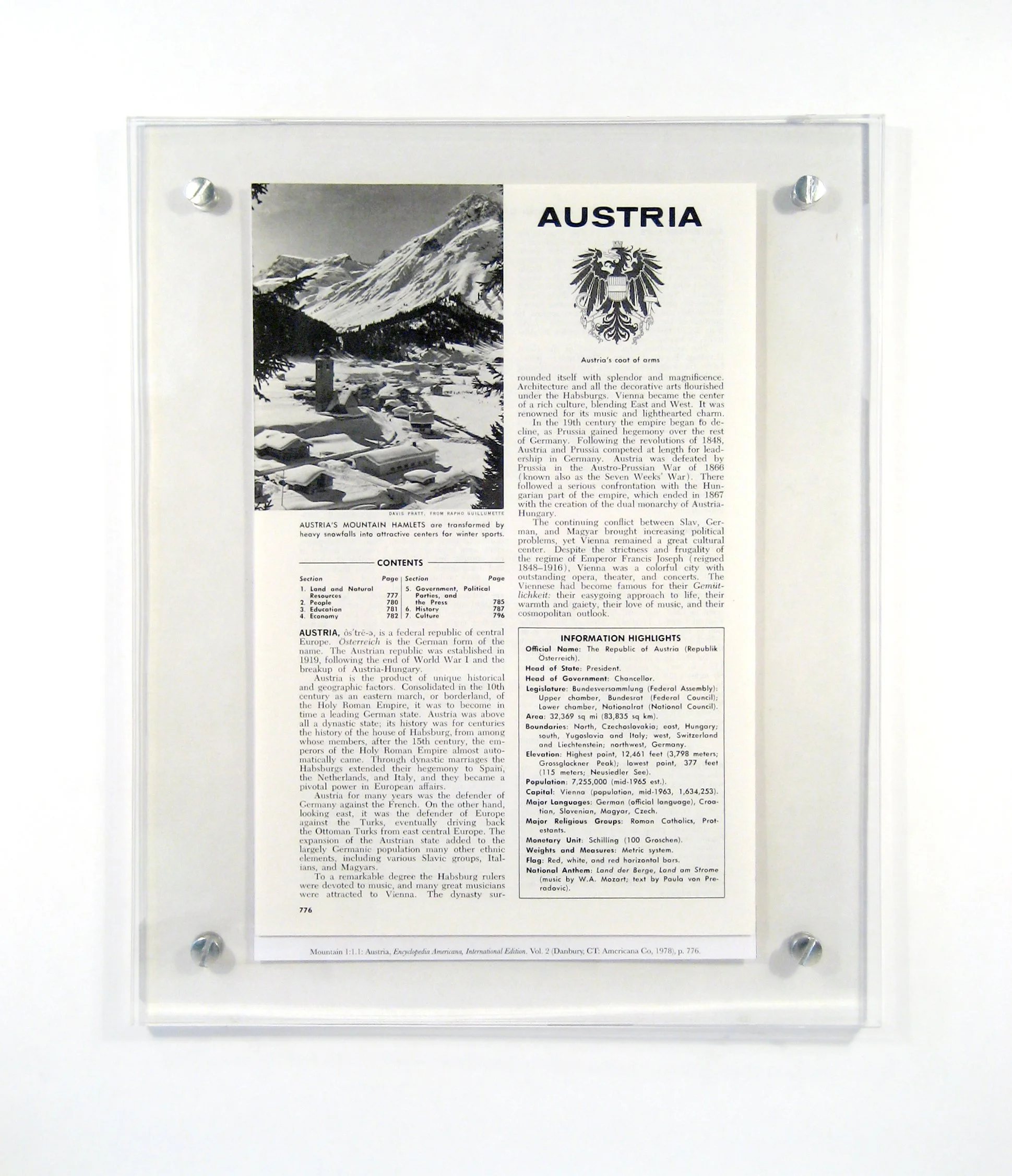
Memorabilia is a project composed of paintings, drawings, and an archive of printed matter that served as its source material. The work began when I discovered an abandoned set of encyclopedias in a basement and physically deconstructed them into binders. I organized the pages into an archive structured by dominant photographic typologies: “Mountains,” “Flowers,” “Creatures,” and “Architecture.” From these fragments, I produced drawings and paintings that translated the images into new forms, making visible the artifice behind the construction of historical knowledge. Like dioramas in a natural history museum, the works exposed the conventions by which images of nature and culture are turned into artifacts.
Every component of the project—painting, drawing, and document—was indexed within an alphanumeric system that traced it back to its origin. Each was further classified into categories: paintings as “Objecthood,” drawings as “Materiality,” and printed matter as “Historicity.” The result was both an archive and a counter-archive, a system that at once catalogued and destabilized its own contents.
Developed in the early 2000s, Memorabilia responded to the technological transformations of the digital era, when physical reference books were being displaced by online encyclopedias such as Wikipedia. Informed by Michel Foucault’s Archaeology of Knowledge, the project reflected on obsolescence, the instability of facts, and the anxiety of the archive itself. At stake was the fragility of knowledge systems—their capacity to preserve, but also to erase and reorder history.
In retrospect, Memorabilia anticipated many of today’s concerns: the disappearance of physical archives, the rewriting of historical evidence, and the vulnerability of both material and digital records. It also laid the conceptual groundwork for later projects like Storytelling, where questions of representation, erasure, and the politics of knowledge moved into the terrain of landscape and resource extraction.